
Brand · Strategy
Your brand is a Rubik's Cube
Every brand decision moves five faces of your company. What a CEO can learn from the Rubik's Cube: the centers, the layers, the algorithm and the twenty moves.
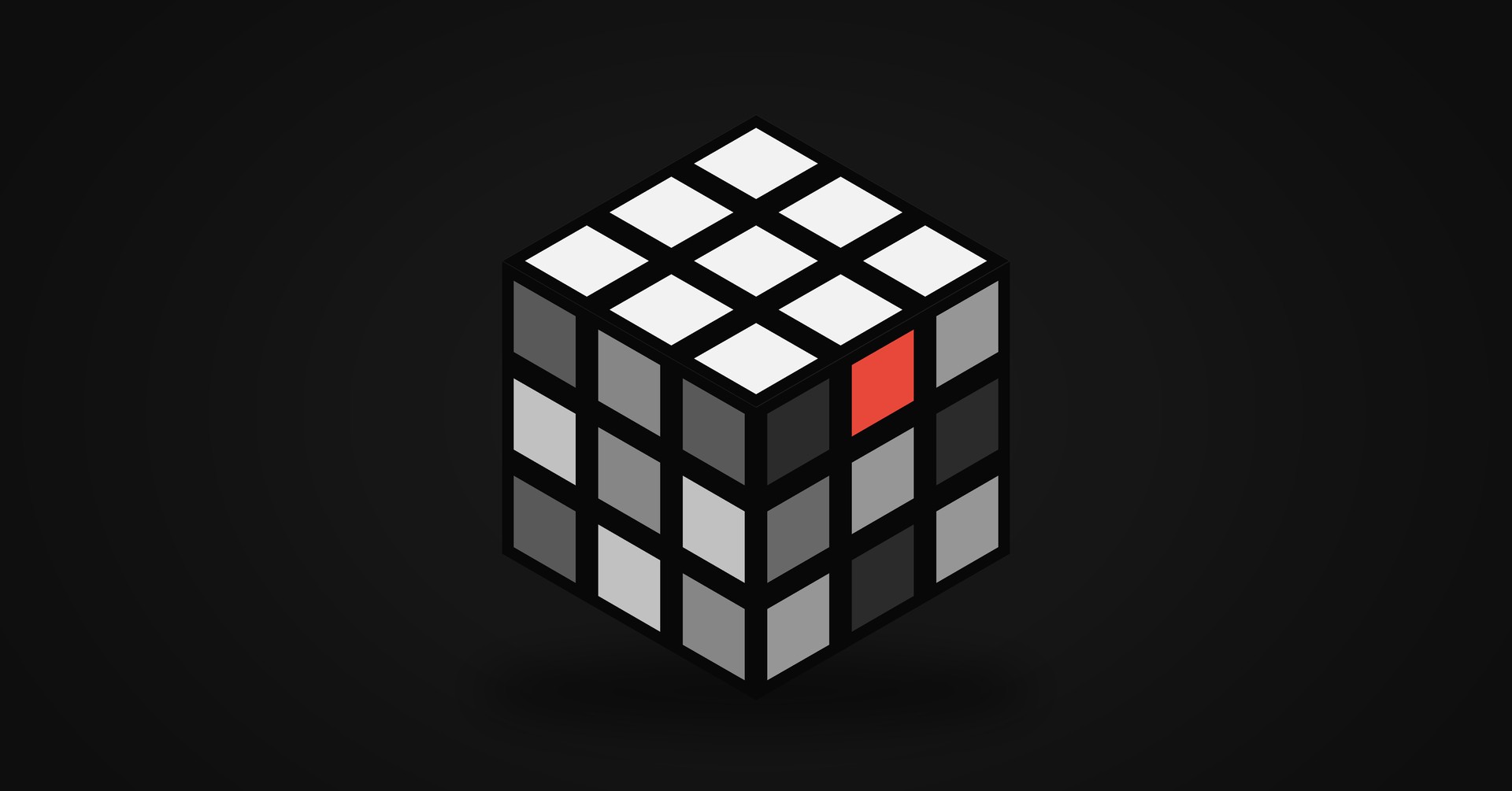
Anyone who has held a Rubik's Cube remembers the first face. You turn, you search, you lose patience, and at some point you see it: nine white squares. Then you turn the cube on its side. The first row on every side is a jumble of colors, and every move you make to fix it breaks the white face.
Many rebrands look exactly like this. New logo, new website, new campaign. The marketing face shines and everyone in the meeting is pleased. Three months later, the sales team is still selling on discount, customer service answers the way it always has, and the customer who came in through the campaign finds a company different from the one they were promised.
Brand strategy works like the cube: almost every piece belongs to two or three faces at once. The logo is one square. The brand is the way everything fits together: what you say, what you charge, how you sell, what the customer experiences after the purchase. Here are five things the cube teaches anyone who runs a business.
1. The centers don't move
On a standard cube, the six center pieces always keep the same position relative to each other, however much you turn it. The center tells you what color the face will be. Every other piece moves to fit around it.
In a brand, the centers are three decisions: who you serve, what you promise them, and why they should choose you. This is what we call positioning. Once these are fixed, every other decision knows where to go: price, message, the sales conversation, packaging.
Many SMEs change their center every season. A new competitor arrives, we change the message. A new marketing manager joins, we change the audience. Sales dip for a quarter, we cut the price. Each time the pieces look for a new destination and the team starts again from scratch.
A quick test: ask five people on your management team to write down, separately, in one sentence, who the company serves and what it promises them. If you get five different answers, your cube has no centers yet. That's where you start, before you touch anything else.
2. Every move touches five faces
When you turn one face of the cube, you move pieces on five of its six faces. Only the opposite face stays still. The beginner watches the face being turned. The experienced solver watches what will happen to the four around it.
The same is true of every brand decision. The decision is made in one meeting, and its consequences land across the whole company:
| The move | Marketing | Sales | Customer experience | Team and operations |
|---|---|---|---|---|
| You raise prices to go premium | New message, fewer promotions | Salespeople sell value instead of discounts | Customers expect more at every touchpoint | Training, a higher standard of service |
| You promise "delivery in 24 hours" in the campaign | Strong hook, good conversion | Deals close more easily | You are judged on every order | The warehouse and logistics carry the weight |
| You shift from consumers to businesses | Different channels, different language | Longer sales cycle, proposals, negotiation | Payment terms, one person per client | New roles, different skills |
That's why brand is the CEO's job. Marketing can design the move. Only the CEO sees all five faces that will shift, and can say who carries what.
3. Experienced solvers work in layers
The method most people learn is called layer by layer. You solve the bottom layer first, then the middle, then the top. The first layer has the same nine white squares as the first face, plus something more: each piece also matches the color next to it. It is correct on all four sides at once, which is why it counts as real progress.
In a brand, a layer is one promise that holds across the entire customer journey. What the ad says, the salesperson says too; the customer experiences it at delivery and finds it again on the invoice and in the call after the purchase. One promise solved this way is worth more than five promises that live only in marketing. This is where alignment shows: departments move in the same direction because they are looking at the same promise.
Pick one promise your brand makes and follow it step by step, from the ad to after-sales. Somewhere it will break. That's your next job, before any new campaign.
4. The algorithm breaks things to fix them
On the cube, an algorithm is a sequence of moves that brings one piece into place. Halfway through the sequence, pieces that were already correct leave their positions. At the end they all come back, along with one more piece in the right spot. Stop in the middle and you are left with a cube worse than the one you started with.
A repositioning goes through the same point. For a while some long-standing customers get confused, the team is still working out how to talk, the sales cycle gets longer and the quarter comes in lower. That's where many CEOs hit the brakes. And they end up with the worst outcome: half the old brand, half the new, and a customer who understands neither.
Leadership's job is to know in advance how much disruption the move will cause and how long it will last, and to tell the team before it starts. When the numbers drop, everyone knows what they're looking at. The dip was in the plan. A team caught by surprise, on the other hand, looks for someone to blame.
5. Billions of combinations, twenty moves
The cube has 43,252,003,274,489,856,000 possible positions, more than 43 billion billion. In July 2010, four researchers using computer time donated by Google proved that every one of them can be solved in twenty moves or fewer. That number is known as "God's Number".
The options for your brand look endless too: channels, messages, partnerships, AI tools, events. The moves that matter are few. The hard part is knowing which ones. Someone turning the cube at random can keep turning it for years. Many brands do exactly that: a post every day, a campaign every month, a new idea at every meeting. Lots of motion, little progress.
The Momentum Equation™ has a name for the difference. Useful Energy is energy that goes somewhere. The rest burns up along the way.
In official speedcubing competitions, the competitor has less than 15 seconds to inspect the cube before starting. During that time they may not make a single move. They look, find where the pieces are, and plan the first moves in their head. The fastest people in the world start by looking.
Many marketing plans go straight to the moves: what we'll post, where we'll advertise, which tool we'll buy. What's usually missing is the 15 seconds before them: where we are today, what centers we have, which promise breaks and where.
Before your next move
Four questions for your next management team meeting:
- If you asked five people on your team what the company promises, how many different answers would you get?
- What was the last big brand decision, and which faces moved without anyone having planned it?
- Which of your promises holds across the entire customer journey, from the ad to after-sales?
- Of the moves you made in the last six months, how many would you make again if you were planning them today?
Ernő Rubik made the first cube in the spring of 1974 in Budapest. He was a young architect who wanted to show his students how shapes move in space. It took him a full month to solve his own creation. A founder who built their company is also entitled to time to work out how its brand is solved, as long as every move from here on has a reason.
If you don't know which faces your next move will shift, hold it for a moment. Look at the cube first.